Thursday, September 29, 2011

Zsa Zsa’s House Gets $2.1M Price Cut


It turns out that Elvis never did set foot in Zsa Zsa Gabor’s home. Maybe that’s what helped lead to a king-size price reduction.
The mansion was first listed on the Bel Air real estate market for $15 million but recently had a significant $2.1 million price cut. The opulent home now lists for $12.9 million — not bad for a house that Zsa Zsa has long claimed was once owned by Elvis and Howard Hughes.

According to a story in the LA Weekly, where the granddaughter of the first owners charged Zsa Zsa with telling “tall tales,” the house was leased by reclusive millionaire Hughes for most of the 1960s, but Elvis never set foot inside. Another clarification: Zsa Zsa did not purchase the home from Hughes, but from a couple who built the home in 1955. Zsa Zsa seems to have gotten a bargain, paying $250,000 and not the $600,000 previous claimed.
Despite the confusion over who did or did not live in the Regency-style mansion, it’s been the home of the blonde starlet since the mid-1970s.
For months, Zsa Zsa Gabor’s home has been rumored to be for sale. In January, Frederic Prinz von Anhalt gave a tour to the LA Weekly, noting that he was forced to sell the home to pay for Gabor’s increasing medical bills.
“I just want to settle my wife’s debts and keep her comfortable,” von Anhalt said.
Gabor has been hospitalized on and off the past several years due to mucus in her lungs, liver problems and sporadic fevers. Her leg was amputated in January after an infection from an earlier hip replacement surgery.
The 4-bedroom, 5-bath home is situated in a gated community in exclusive Bel Air. With over 6,393 square feet of living space and over an acre of property, the home is filled with “exquisite French details and moldings throughout the house, high ceilings, tall and glamorous French doors.” The house also features a grand entry, large formal sitting room with antique French fireplace, and formal dining room with views of the city. The landscaped yard includes a pool and patio with additional views of L.A.’s skyline.
Despite the French antiques, the house is in need of some work.
“This home is waiting for you to remodel it,” the property listing says.
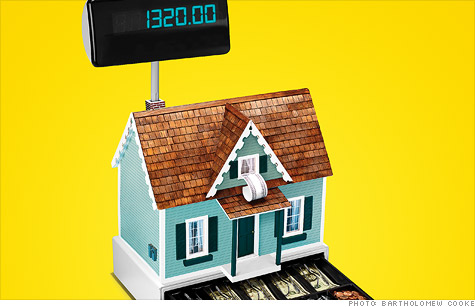
Even with a price cut, Zsa Zsa’s pad is pricey. With a 20 percent down payment and 30-year-mortgage, the monthly payment is $54,765.
if you like to buy this home give me a call.
Best Sindy

Wednesday, September 28, 2011

Look Beyond Your Mortgage Payment


Check out the great info from 
Colin Robertson is the founder and writer of The Truth About Mortgage.
When shopping for a mortgage, it’s important to obtain multiple quotes from various lenders to ensure you get the best deal, just as you would if you were shopping for a new flat-screen television or a brand-new car.
Yet, only about 40 percent of borrowers actually receive more than one quote and most people spend more time car shopping (10 hours) than mortgage shopping (5 hours). And most of these consumers probably only focus on one thing, the monthly mortgage payment.
Heck, this is what most banks and lenders focus on, so why wouldn’t consumers? But, selecting the right mortgage goes far beyond that monthly payment.
Why, you ask? Well it’s simple really. The less you pay each month, the more you pay over the life of the loan.
In short, you’ve got to look at the big picture when shopping for a mortgage, not just that “low, low payment” you see advertised.
Let’s look at a quick example to illustrate this concept, using a $300,000 loan amount:
30-year fixed mortgage @4.25%
Monthly payment: $1475.82
Total interest paid: $231,295.20
20-year fixed mortgage @3.875%
Monthly payment: $1798.24
Total interest paid: $131,577.60
15-year fixed mortgage @3.25%
Monthly payment: $2108.01
Total interest paid: $79,441.80
So here we have three fixed-rate home loan options. You’ll notice that the mortgage rate rises as the loan term gets longer.
You’ll also notice that the monthly payment drops as the mortgage term increases.
For this reason, despite the higher rate, most consumers would go with the 30-year fixed mortgage rate, which has the lowest monthly payment, making it the “best deal.”
But by doing so, these borrowers would pay $100,000 more in interest over those 30 years than a borrower who chose the 20-year fixed mortgage. And $150,000 more than the borrower who opted for the 15-year fixed.
It would also take an additional 10 and 15 years, respectively, until your home was actually yours.
Now this isn’t to say the 20-year or 15-year is necessarily a better option than the 30-year, but it does demonstrate the impact of a lower payment made over a long period of time.
And it’s certainly worth your time and consideration to weigh different options based on your unique financial profile.
If you are insistent on paying off your mortgage, going with a shorter-term mortgage, such as the 20-year fixed or 15-year fixed mortgage rate, makes sense.
But if you think your money is better served in other investments, such as the stock market or a retirement account, perhaps sticking with a traditional 30-year is your best bet.
Regardless, take the time to shop around and compare all possible loan options. Because you’re not buying a new TV, you’re financing a home — possibly one of the biggest decisions you’ll ever make.


I have leaders I can referrer to you, let me know if you want more info.
sindy@sindytennesrealty.com
Have a great day, Best Sindy

Breaking Real Estate News Case-Shiller Home Price Index Increases.


Good News: Home prices rose in July, according to the S&P/Case-Shiller home price index, and have now risen for four straight months.
Bad News: Home prices generally rise in July, and they’re still down 4.1 percent year on year.
The index rose 0.9 percent, above consensus expectations of 0.7 percent, according to Reuters, while 17 of the 20 cities measured had price increases from a month before. But prices often rise in summer as the kids get out of school and parents focus on buying a new place before the fall semester begins. So it’s a better measure of the market to look at the numbers on a seasonally adjusted basis. By that measure, the 20-city index was flat month to month. Of course, given how lousy the housing data has been for the past couple of years, that in itself is not bad news.

We have to take any good news,, it is going the right way.
If you  like any details for your neighborhood please let me know, I'm happy to help.
sindy@sindytennesrealty.com
Have a great day, Best Sindy 

Tuesday, September 27, 2011

Creepy and Kooky? Former Addams Family House Listed.


Creepy and Kooky? Former Addams Family House Listed for $799,000


We snapped our fingers and sang the ditty to The Addams Family’s catchy theme song, but before the creepy and kooky family made it to television in 1964, they were just a mere panel cartoon on the pages of the New Yorker magazine.
And now, the home where The Addams Family was conceived is for sale for $799,000.
The “historic Addams Family home” is located on New Jersey’s Westfield real estate market and it’s where cartoonist Charles Addams brought to life the ghoulishly comedic cast of characters, including Gomez, Morticia, Fester, Wednesday, Pugsley, Lurch, Grandmama and the Thing.
While Addams’ life took on the unusual (he retouched photos of corpses in True Detective magazine; married his third wife in a pet cemetery, and was a marked man when his second wife was scheming to “eliminate him”), the home is traditional in look ‘n feel. According to the listing description, the 1907 home has 6 bedrooms, 2.5 bathrooms and is a historically registered property due to the celebrity status of its the late, great Addams, who lived there until 1947.
The house features a formal living room with fireplace, formal dining room with butler’s pantry, eat-in-kitchen with granite countertops and sliding doors to the deck.
In the back is a richly landscaped backyard, gardener’s shed and two-car detached garage.
If you’re interested in buying this piece of real estate with a macabre twist, the monthly mortgage payment on Addams’ former home is $4,170 a month, based on a 30-year fixed mortgage rate of 3.86 percent with 20 percent down.

Thursday, September 8, 2011

Painted popcorn ceilings pose problem.

People often ask me about this, please read below.
I would have it removed, may cost more, but it will make you feel better and make it easier to sell later.
Best Sindy

Painted popcorn ceilings pose problem

Removing asbestos becomes difficult By Barry Stone
Inman News™

DEAR BARRY: My home has textured ceilings in the living room and bedrooms, and the material has tested positive for asbestos. A home inspector I know says he removed his asbestos ceilings by himself and that it was simple. He just wet the surfaces; the asbestos material turned to mush; and it was then easily removed.
But when I tried to wet my ceilings, the water wouldn't soak in. Why did this method work for my friend but not for me? --Allen
DEAR ALLEN: When acoustic ceiling texture is wet, asbestos fibers are withheld from release into the air. Therefore, wetting is part of the prescribed method for safe removal, as recommended by your home inspector. But this method works only if the acoustic ceiling texture has never been painted.
Unpainted ceiling texture is soft and permeable. It soaks up water as readily as a sponge. When wet, it is as mushy as oatmeal and can be easily removed with a drywall knife, without releasing asbestos fibers into the air. But when the texture has been painted, it becomes totally waterproof. The paint seals the material so that water penetration and easy removal are no longer possible.
During the 1980s and early '90s, removal of acoustic ceiling texture was commonly done for environmental safety reasons, because breathing asbestos fibers was found to cause various lung diseases. That practice became less common when it was realized that asbestos ceilings pose no health hazards if left alone.
Air contamination, it was realized, occurs when the material is disturbed, causing the release of asbestos fibers. In more recent years, removal of acoustic ceiling texture has become popular because the cottage cheese look makes a home appear out of date.
If you scrape off the acoustic texture while it is dry, asbestos fibers can contaminate the air and interior surfaces in your home. Therefore, removal should be done by a licensed asbestos abatement contractor to ensure safety. Unfortunately, the cost of professional asbestos removal is prohibitive. Because of this, some homeowners have opted to install a second layer of drywall over the asbestos surface.
This can be done for less money than asbestos removal. However, drywall application over an acoustic ceiling can cause abrasion, resulting in the release of asbestos fibers. Therefore, such work should be done only with the advisement and supervision of an asbestos abatement contractor.
For more information regarding residential asbestos, visit the website of the Environmental Protection Agency at www.epa.gov/asbestos, or call the EPA at (202) 566-0517 and request a copy of the booklet, "Asbestos in the Home."
DEAR BARRY: We want to build an addition on our home but can't get a permit because of an easement on the property. The original purpose of the easement was to provide access to two homes situated behind ours, but those properties now have their own driveways. Is there any way this easement can be removed? --Beth
DEAR BETH: If the easement was established for purposes that are no longer necessary, there should be a legal way to nullify it. The neighbors with the new driveways will probably have to approve this, and as long as they are reasonable people, there should be no reason for them to refuse. To determine the necessary legal procedures, consult your local building department. You may also need some advice from a real estate attorney.

Buying a Fixer-upper ??

Great info, Hope you find it helpful.
Let me know if you like to start looking for a fixer-upper...
Have a great day, Best Sindy

Buying a Fixer-Upper? Learn More About the FHA 203k Loan

In most areas of the country, the number of homes for sale that are in need of at least a few repairs prior to moving in is substantial because many times in a short sale or foreclosure situation, the seller will allow the home to go into some state of neglect.
So, to help finance needed repairs to the home, buyers shopping for a mortgage should look into the FHA 203k loan program.

The FHA 203k and FHA Streamline 203k Loans

The FHA 203k loan program can be grouped into two different types of loans: the FHA Streamline 203k loan program and the FHA 203k loan. The FHA 203k streamline is designed to be a limited repair program and has simpler processes and no HUD consultant required like on the full FHA 203k loan. In my experience, the FHA 203k streamline is a more popular option since many of the needed repairs for bank-owned homes can be considered “cosmetic.”
Highlights of the FHA 203k streamline loan:
  • It works very similar to a construction loan – it allows you to purchase a home that wouldn’t qualify for FHA financing due to repair work being needed
  • The loan amount is equal to the purchase price of the home plus the amount needed for repairs
  • FHA 203k streamline program allows for repairs ranging from $5,000 and $35,000
Highlights of the FHA 203k loan:
  • Qualifying for FHA 203k loans are the same as regular FHA loans
  • Repair work cannot begin until loan closes and the money to pay contractors comes from an escrow account set up when the loan closed
  • FHA 203k loans require UFMIP and MIP just like regular FHA loans
  • Appraisal required
  • Currently available for owner-occupied properties only although rumors are surfacing of an “Investor 203k loan” coming soon.
The FHA 203k programs can be used to finance both needed improvements as well as wanted improvements.
The FHA 203k loan can go up to 10% over appraised value of the home. Here is a simple example that illustrates how the financing package works:
  • As-is cost of a home: $150,000
  • Improvement costs: $20,000
  • Total cost of home after improvements: $170,000
  • Required appraised value = $154,545
Simply put: With the 203k loan, it is possible to buy a house in need of repairs for $150,000, finance $20,000 worth of repairs and have the home appraise after the improvements for $154,545.
No wonder this loan is so popular option for financing a foreclosure, bank-owned property or a short sale.

Friday, September 2, 2011

Cashing in on rental property. Don't get left behind !!

Want passive income ? Make your money work for you !!

With housing price still down, low mortgage rate and rent price up. It is time to look into rental property's. I think duplex's - 4-plex's is the way to go, rent from 2-4 unites instead of just one will boost your cash flow and a single vacancy won't hurt as much. contact me and let talk about what work best for you. Don't get left behind !

Have a great day, Sindy 

Cashing in on rental property


@Money 
Rental property investing
(MONEY Magazine) -- Most of the news lately about real estate has been dismal: Home prices are swooning, foreclosures ballooning.
There is, however, one bright spot: the rental market, where demand is up and rents are rising. That's partly because those foreclosures have turned more than 4 million former homeowners into renters, but also because many other prospective homeowners, worried about losing their jobs or housing prices falling a lot further still, are reluctant to buy now.
As with many investments, the best time to get in is when most others are sitting on the sidelines. To figure out whether you can benefit by investing in rental property, here's what you need to know.
THE CASE FOR BUYING NOW
Many factors make this a great time to invest. Mortgage rates are at a 40-year low, and homes in many areas are ultra-cheap. Meanwhile, demand for rentals has risen in more than 500 cities, according to recent Census data. That, in turn, has enabled landlords to charge more. Hotpads.com, a real estate research firm, reports that rents nationwide jumped 11.6% in 2010, to $1,320 a month.
You'll need that rental income to tide you over until home prices bounce back; in fact, the typical investor today plans to hold for 10 years, according to a survey by the National Association of Realtors.
If you can hang on that long, you've got a good shot at solid gains, especially if you're financing the home purchase. "Whereas leverage is dangerous when buying stocks, it can be a good long-term strategy with real estate," notes real estate investor and Columbia University adjunct finance professor Marshall Sonenshine.
The big catch: "Can you afford to hold the property that long and not need the equity for your kid's college fund?" says Sonenshine. Or whatever other pressing need might crop up.
You'll also face some tough financing rules. Most banks now require a down payment of at least 20% to 25% and evidence you have enough cash to cover six months' worth of mortgage, tax, and insurance payments.
HOW TO FIND A GOOD DEAL
Investment real estate is like produce: It's best bought locally. "Buy something you can get to in 10 minutes," says Seattle real estate investor Bill Snyder.
Familiarity with the neighborhood also limits nasty surprises like a noisy bar or a nearby development competing for renters.
Work with a local realtor who has experience with rentals and can help you assess how attractive a given home will be to tenants.

And while prices on multifamily dwellings haven't dropped as much as they have on single-family homes, don't ignore plexes: Intake from a few rents instead of just one will boost your cash flow; a single vacancy won't hurt as much; and you could benefit from economies of scale for things like appliances and painting. But stick to buildings with four units or fewer to avoid stricter financing requirements, such as a bigger down payment and higher mortgage rates.
Once you've identified candidates, crunch the numbers. The goal: to make sure your rental income will at least cover your loan payments, plus a 20% cushion to handle repairs, vacancies, and property management.
To figure out what you'll garner in rent, ask sellers for recent leases, says Snyder, and double-check their numbers by perusing sites like Rentometer and Craigslist for similar rentals in the neighborhood.
Assume your mortgage rate will be at least a half-point higher than rates on owner-occupied properties. Factor in insurance and property taxes, and bank on a 5% vacancy rate. Otherwise, "one empty month can kill you," says Ellie Berlin, a broker with Houlihan Lawrence in Larchmont, N.Y.
KNOW WHAT YOU'RE IN FOR
Brush up on your people skills: Owning rentals also means responding to tenant complaints, like the 2 a.m. phone call about a broken toilet. Want to palm off the grunt work? You can hire a handyman (around $45 an hour) or a management company but the luxury will eat into cash flow.
To find your own tenants, creative ads on Craigslist. Run credit and reference checks (National Tenant Network, at ntnonline.com, can help). And invest in small touches to make your place stand out, such as cool lighting fixtures or antique door hardware. Those will pay off when it's time to sell too.  To top of page

LA big winner !!

Great Real Estate news !!! LA the big winner. Looks like a big turn around, LA was the biggest gain in housing permits 73% in the first half of this year, really showing that the believe that the LA housing market is  doing a turn around, that with the rental market going up and mortgage rate at a all time low.
It is time to contact me and get you on the road to being a home owner.
Have a great day, Sindy.

10 top housing winners and losers

No. 10 — The Minneapolis metropolitan area saw housing permits drop 20.6 percent to 2,006 in the first half of 2011 from the previous year, according to figures from the U.S. Census Bureau. About 82 percent of the permits were for single-unit structures. The Tulsa metro area saw the tenth greatest increase, at 20 percent, to 1,625; about 51 percent were single-unit structures.

Census figures show some unexpected trends in housing construction, with a resurgence in parts of California and big declines in parts of Texas.
Among metro areas where at least 1,000 permits were issued during the first six months of the year, the biggest losers included Sacramento and Riverside, two inland California metro areas hit hardest by the recession. But El Paso, a city in recession-resistant Texas, also made the list of 10 steepest declines.
The biggest gain was in Los Angeles, which surged 73 percent to 8,431 in the first half of 2011 from the same period in the previous year.
Nationwide, the number of housing permits issued in metropolitan areas dropped 4.8 percent.