Sunday, September 8, 2013
Please Come to my Open House today !!!!
Please come to my open house today Sunday 9/8-13, 2-5pm.
Beautiful home, wonderful area, nice street, north of Pico.. 3bedrooms, 2bath, listed at $899,900
For more pic's please click here go to my Facebook page
Friday, July 26, 2013
Rents not easing despite rise in rates; owners are benefiting
great read, check it out..
The number of renters in the U.S. rose more than 1.1 million in 2011-12, and with demand came higher rents.
Click for LA times story
Tuesday, June 11, 2013
Not too late, but good to know, Best Sindy
Why Some Buyers Are Feeling Like They Missed Out...

By Les Christie
Say goodbye to ultra-low mortgage rates. In the past month, rates have been on the rise and they are expected to continue to climb. This week, the average rate on a 30-year fixed-rate mortgage jumped another 10 percentage points to 3.91 percent and are up from 3.3 percent in early May, according to mortgage giant Freddie Mac. Meanwhile, those seeking a 15-year loans received an average rate of 3.03 percent, up from 2.56 percent -- a record low.
"It's unlikely that rates will ever be that low again," said Doug Duncan, Fannie Mae's chief economist. Those who didn't take advantage of record-low rates have missed the boat -- at least for now. Here are three reasons why:
1. The Fed is going to stop bolstering the housing market. The Fed has kept rates at rock-bottom levels by buying up to $85 billion a month of Treasury bonds and mortgage-backed securities. That has enabled lenders to sell mortgage loans at low interest rates and recoup their money immediately -- plus profits.
"Up until recently, expectations were that the Fed would begin to taper purchases of mortgage-backed securities and Treasury bonds late in 2013, but that time frame appears to have moved to September, possibly sooner," said Keith Gumbinger, vice president of HSH.com, a mortgage information company.
If the Fed stops purchasing the securities, private investors will have to pick up the slack. For investors to do that, the loans will have to offer a better payoff. And that would mean raising rates for borrowers, said Duncan.
2. The economy is no longer reeling. During the recession, the Fed lowered its short-term interest rate to near zero in order to stimulate the economy. But now conditions have improved considerably since the economy emerged from recession four years ago. As the economic revival gains traction, it is creating a tailwind for interest rate increases, according to Gumbinger.
Low rates happen when the economy is in distress. But now, the market believes the economy is getting stronger, said Wendy Cutrefelli, a vice president in the Mortgage Banking Division of Bank of the West. Job gains have picked up lately, averaging about 202,000 a month over the past six months. That hiring is advancing rather than retreating is good news for the economy, and any positive future reports are expected to push rates higher, according to Gumbinger. Even mediocre news might not cause any meaningful decline in rates.
3. 3.3 percent rates are unprecedented. "The 30-year [mortgage rate] hit a 37-year low in 2003 at 5.23%," said Gumbinger. "That was the previous low-watermark prior to this financial crisis, and it's likely we will move closer to that mark as we grind forward." Any return to normal conditions, therefore, will likely be accompanied by higher mortgage rates.
Even if they go up a percentage point or two, however, mortgages will still be relatively low. Historically, 30-year loans are usually 5.5 percent or higher. For clues to the direction of mortgage rates, look at the daily movements in 10-year Treasury bond yields. Mortgage rates track Treasury yields with the difference between them holding fairly constant.
These days, Treasury bonds have been on a jumpy uphill climb, with the 10-year hitting 2.21 percent on May 31, its highest closing since April 2012. On Thursday, the yield was about 2.10 percent. Since the interest rate on a 30-year is usually 1.7 to 2 percentage points higher, it indicates that mortgages should be at between 3.82 percent and 4.12 percent this week.
Monday, May 13, 2013
Happy Mothers day !!!
Did you know..
great info, have a wonderful Mothers day !!!
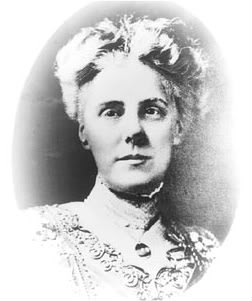
AnnaMarieJarvisMother’s Day was founded in 1907 by a West Virginia woman as a tribute to her own mother. In her 40s, Anna Marie Jarvis, a college graduate, quit her job and incorporated herself as the Mother’s Day International Association.

Jarvis was so passionate about her vision that she succeeded within 6 years in persuading the governors of nearly every state in the union to embrace Mother’s Day. By 1914, she had won over the U.S. Congress. That year President Woodrow Wilson signed a Congressional resolution declaring the second Sunday in May the nation’s day to honor mothers (for their role in the family, however, not the public sphere).
Rampant commercialization of Mother’s Day has kept it alive for a century, but the strong-willed Jarvis, ironically, detested any profiting from the holiday. She believed offspring should honor mothers with handmade gifts and letters, rather than with printed greeting cards and floral arrangements. So, after succeeding in seeing Mother’s Day widely adopted, Jarvis spent the rest of her life and funds fighting those who tried to profit from it, it has been widely reported. Her battles included filing a lawsuit against New York’s governor and publicly criticizing Eleanor Roosevelt for work with a Mother’s Day committee.
Jarvis set about fulfilling her vision with the passion of a typical entrepreneur. With funding from family—including from the estate of her brother, the founder of a taxi company—she trademarked the phrase “Mother’s Day” and pursued a plan to see the holiday adopted worldwide, according to her 1948 New York Times obituary. Unfortunately, like many entrepreneurs, it seems Jarvis was better at the execution of her vision than at managing the day-to-day business. Though at one point she had the resources to purchase a building solely for housing her prolific correspondences, the Times reported upon her death that her finances had become “almost a hopeless muddle.” Other biographies say she died in poverty.
One final irony of Jarvis’s life, according to her Wikipedia biography: “Anna Marie Jarvis never married and had no children.” Perhaps she was too busy running her organization.
great info, have a wonderful Mothers day !!!
AnnaMarieJarvisMother’s Day was founded in 1907 by a West Virginia woman as a tribute to her own mother. In her 40s, Anna Marie Jarvis, a college graduate, quit her job and incorporated herself as the Mother’s Day International Association.Rampant commercialization of Mother’s Day has kept it alive for a century, but the strong-willed Jarvis, ironically, detested any profiting from the holiday. She believed offspring should honor mothers with handmade gifts and letters, rather than with printed greeting cards and floral arrangements. So, after succeeding in seeing Mother’s Day widely adopted, Jarvis spent the rest of her life and funds fighting those who tried to profit from it, it has been widely reported. Her battles included filing a lawsuit against New York’s governor and publicly criticizing Eleanor Roosevelt for work with a Mother’s Day committee.
Jarvis set about fulfilling her vision with the passion of a typical entrepreneur. With funding from family—including from the estate of her brother, the founder of a taxi company—she trademarked the phrase “Mother’s Day” and pursued a plan to see the holiday adopted worldwide, according to her 1948 New York Times obituary. Unfortunately, like many entrepreneurs, it seems Jarvis was better at the execution of her vision than at managing the day-to-day business. Though at one point she had the resources to purchase a building solely for housing her prolific correspondences, the Times reported upon her death that her finances had become “almost a hopeless muddle.” Other biographies say she died in poverty.
One final irony of Jarvis’s life, according to her Wikipedia biography: “Anna Marie Jarvis never married and had no children.” Perhaps she was too busy running her organization.Sunday, May 5, 2013
Please come to my open house today 2-5pm..
This is a wonderful opportunity to own a beautiful, updated, well-maintained Craftsman in one of LA's most desirable areas. Located in Sunset Square -- just off Sunset Strip, steps from shopping, errands, and gorgeous Runyon Canyon. The generous floor plan features two master suites, three full bathrooms, a laundry room, hardwood floors, and a spacious chef's kitchen. Over sized windows and skylights allow for an abundance of natural light. Lovely front garden, and peaceful back yard with a redwood privacy fence on a large lot make this a true neighborhood home. 4bedrooms, 3 bath, 2,408 sf. listed at 1,219,000
please go to my Facebook page for more pic's;www.facebook.com/SindyTennesRealtor
Friday, March 29, 2013
Big Predictions for Housing for Next 2 Years
Daily Real Estate News | Friday, March 29, 2013 Home sales are projected to post some big gains in the next two years, according to Fannie Mae’s latest monthly economic outlook.
Fannie Mae economists predict that existing-home sales will rise by 10.5 percent this year, and by 6.2 percent in 2014. The economists made even bolder projections for new single-family home sales -- growing 15.1 percent this year and 44.1 percent in 2014.
"We expect home prices to firm further amid a durable housing recovery, continuing to boost household net worth, gradually diminishing the population of underwater borrowers, and reducing incentive for strategic defaults," according to Fannie Mae’s report.
Fannie Mae projects that mortgage rates will stay low by historical averages this year, but the 30-year fixed-rate mortgage will rise from an average of 3.5 percent during the first quarter to an average of 4 percent during the final three months of 2013. During the fourth quarter of 2014, mortgage rates are projected to tick up to a 4.5 percent average.
Mortgage applications for purchases are projected to increase by 16.8 percent this year and by 17.1 percent in 2014. However, a decline in applications for refinancings will likely cause mortgage originations to be down 14.5 percent this year and by 31.4 percent in 2014, Fannie economists predict.
Source: “Fannie Mae sees housing upturn as 'intact',” Inman News (March 28, 2013)
Wednesday, January 30, 2013
Home prices shot up in 2012: S&P/Case-Shiller
By Kerri Ann Panchuk
Home prices rose in 19 of the 20 U.S. cities studied by Standard & Poor's for the S&P/Case-Shiller Home Price Indices, falling only in New York, for the 12-month period ending in November.
The 20-city composite index rose 5.5% during the 12-month period, while the Case-Shiller's 10-city composite index rose 4.5%. Bloomberg noted that November home prices grew the most in six years, suggesting a significant market turnaround in 2012.
The recovering market of Phoenix experienced rapid price appreciation, with home prices jumping 22.8% for the 12-month period ending in November.

Prices also grew from October to November of last year.
"The November monthly figures were stronger than October, with 10 cities seeing rising prices versus seven the month before," said David Blitzer, chairman of the Index Committee at S&P Dow Jones Indices.
"Phoenix and San Francisco were both up 1.4% in November followed by Minneapolis up 1.0%. On the downside, Chicago was again amongst the weakest with a drop of 1.3% for November."
Blitzer added, "Housing is clearly recovering. Prices are rising as are both new and existing home sales. Existing home sales in November were 5 million, highest since November 2009. New home sales at 398,000 were the highest since June 2010. These figures confirm that housing is contributing to economic growth."
But seeing strong price growth is not necessarily evidence of a full recovery, according to Josh Tashjian, principal at Centurion Real Estate Partners in New York City.
"It's a further indication of a separation between the haves and have-nots," Tashjian said. "It shows the larger cities – with a better economic basis, demand generators and foreign investment – appreciating at a rate far more rapidly than the wider U.S. Only when consumers are able to entre the market through better financing and increased job growth will we see the rest of the country catch up with the larger MSAs."
Subscribe to:
Posts (Atom)